Astigmatism is a common cause of blurred vision. It occurs when the cornea has an irregular shape or as a result of an irregularity in the curvature of the lens. With advancement in Surgical Techniques and IOLs, it is now possible to correct/reduce Astigmatism along with Cataract Surgery with Toric IOLs and/or Limbal Relaxing Incisions(LRI)
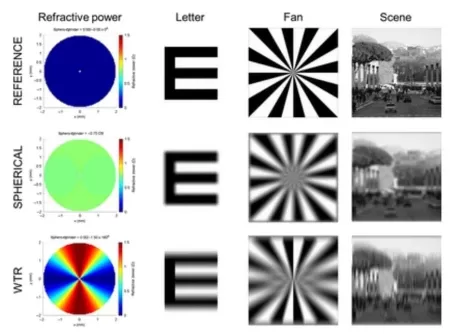
What is Astigmatism?
When the cornea or lens of the eye is irregularly shaped, it prevents light from focusing properly on the retina (the light-sensitive surface at the back of the eye). This can cause blurred vision at any distance, leading to discomfort and headaches. Astigmatism often occurs with other vision conditions, such as nearsightedness (myopia) and farsightedness (hyperopia), referred to collectively as refractive errors (because they affect the way the eyes refract the light).
How is Astigmatism diagnosed?
Astigmatism can be diagnosed with a comprehensive eye exam. Testing for astigmatism measures how the eyes focus light and determines what power of optical lens is needed for correction. The exam may include testing for:
Visual Acuity
This is expressed as a fraction, with the top number representing the standardized testing distance of 20 feet, and the bottom number representing the smallest letter read in a standard eye chart exam. Normal visual acuity is 20/20.
Refraction
Refraction is a test that the eye specialist uses to measure a person’s refractive error. Refractive error is when your eye does not bend light coming into your eye properly as it passes through the cornea, the crystalline lens and fluid media to come to a sharp, clear focus onto your retina. The refraction test will tell the doctor what lens prescription is needed in order to have normal 20/20 vision.
Keratometry and Corneal Topography

The primary instrument used to measure the curvature of the cornea is a keratometer. It focuses light on the cornea and measures its reflection. A corneal topographer generates a contour map of the cornea, providing detail of its shape.
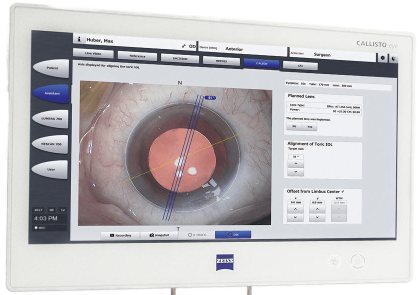
Precise Astigmatism Correction with Zeiss Callisto Eye
With ZEISS CALLISTO eye® markerless alignment, manual marking steps can be skipped altogether for an efficient1 and precise2 toric IOL alignment to reduce residual astigmatism. It helps you meet patient expectations with assistance functions projected directly into your surgical field.
How is Astigmatism treated?
Many people have some degree of astigmatism. In most cases, slight astigmatism does not affect vision and does not require treatment. When it is more severe, astigmatism may require treatment with:
- Glasses or contact lenses;
- A series of specially designed, rigid contact lenses to gradually reshape the curvature of the cornea;
- Laser or other refractive surgery to reshape the cornea; or
- Using an intraocular lens (IOL) specially designed to correct astigmatism in cataract surgery.
- The Light Adjustable Lens (LAL) and Light Delivery Device (LDD) system is approved for patients eligible for cataract surgery, with corneal astigmatism (at least 0.75 diopters), and without pre-existing macular disease.
Toric IOL to correct Astigmatism
Using aToric intraocular lens, Dr. Manoj can treat your cataracts and precisely correct astigmatism in a single procedure. This replacement lens is designed with proven biomechanics and biomaterials to help ensure minimal rotation, so the lens will remain stable and centered in the lens capsule (the natural sac that holds the lens in place). Flexible design allows for optimal placement, and special lens materials ensure that, once implanted, the lens will adhere to the natural structures of the eye.
When placed as a replacement for the natural lens in cataract surgery, the toric IOL has been shown to:
- Reduce spherical aberration for enhanced visual performance
- Increase contrast sensitivity for better image quality
- Improve nighttime driving